Showing posts with label abandoned. Show all posts

Panorama photo of an abandoned hospital


Url: http://www.fotoblur.com/people/izgrablic
Photographer:Igor Zgrablic
Location: unknown

The pressence

Panorama made of 12 shots by hand, hence the distortion on the roof...

On the photo you can see abandoned hospital wing.

The abandoned hospital of Pestújhely


Url: http://eng.petersarkozi.com/pestujhely-hospital/
Photographer: Peter Sarkozi
Location: Budapest, Hungary

A solitary lamp in an abandoned hospital at Budapest, Hungary
In a desolate, dead block, somewhere in the suburban Budapest lies an abandoned hospital. The building was built in 1985 and was used only for eight years, until its closure in 1993. Apart from missing equipment, the hospital is relatively intact, the structure still stands strong, vandalism has not advanced into it luckily.

Broken piano from Detroit


Url: http://www.snweb.org/portfolio/fineart_abandoneddetroit/
Photographer: Sean Doerr
Location: Detroit, Michigan, USA

Broken grand piano from Detroit
Who were these lost Detroiters? Mayors and matrons, train conductors and auto workers, honeymooners and jitterbugging young couples out for a Saturday night—all the rich panoply of faces that make up Detroit’s story. The buildings they inhabit in these pages—the Michigan Central Station, Vanity Ballroom, Cass Tech High School and others—held a central place in the story of Detroit’s Auto Century. It was America’s story, too. Detroiters lived, loved, toiled, played, celebrated and dreamed great dreams in these buildings and thereby helped shape a nation.

Sternradio


Url: http://www.rotweiss.tv/index.php?showimage=485
Photographer: Thoma Müller
Location: unknown


Shady operation


Url: http://www.flickr.com/photos/norue/6179005460/
Photographer: Andreas S
Location: Germany

from an abandoned hospital in Germany

Another shot of the famous (at least in the urbex world) chair and operating lamp at an abandoned soviet hospital hidden by the forests of Germany. One of my favorite places. Just had to process one of these old shots again... :) A classic.

Abandoned mansion on Devil's hill


Url: http://www.flickr.com/photos/tomasz_kulczycki/5446286984/
Photographer: Super Iwan
Location: Gdansk, Poland

An Abanodned Mansion in Gdansk Town Centre (Poland)

Escalier


Url: http://neverends.net
Photographer: Diane DC
Location: unknown


Reaching hand


Url: http://www.flickr.com/photos/bkorponay/5097329922/in/photostream/
Photographer: Brad Korponay
Location: Beausejour, Manitoba, Canada

One of four dolls found in an abandoned shed near Beausejour, Manitoba

The room contained an antique metal bed, a wooden table and a cupboard against a far wall. On the bed were four dolls laying next to each other, placed facing feet first toward the open door. The dolls were in various states of decay and appear to have been there for quite some time.

Each of the dolls were stripped of their clothes, with this, the only one with shoes on. I was drawn to the texture in the shoes, but also wanted the hand in focus as well, so I took 2 shots and manually focus stacked them in post.

Wormhole - Underground pre-metro system


Url: http://www.talkurbex.com/2011/07/exploring-the-underground-pre-metro-system/
Photographer: Dave Baker
Location: Antwerp, Belgium

Wormhole - Underground pre-metro system in Antwerp

The Antwerp Premetro is a network, consisting of lines 2, 3, 5, 6 and 15 of the Antwerp Tram system. It is a 1000 mm rail gauge system, which runs underground in the city centre and further out on surface lines, which are separated from motor traffic. It is intended eventually to evolve into a full metro, similar to the Brussels Metro or German Stadtbahns
It was planned at the beginning of the 1970s to build a completely underground network with a length by 15 km and 22 stations. However, due to financial difficulties only 11 stations have been built. The network is now operated by De Lijn.
The first 1.3 km section opened on 25 May 1975 between Opera, Meir and Groenplaats. Further sections were opened in 1980, 1990, 1996 and 2006. The newest station is at Schijnpoort in the northeast of the system.

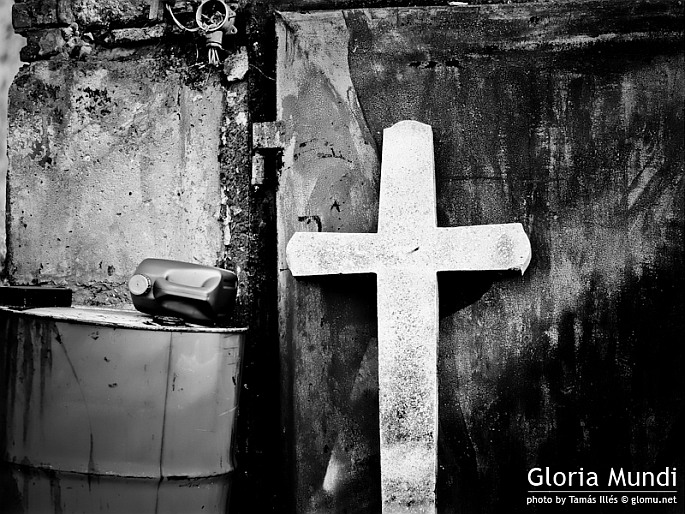
Respect the dead


Url: http://www.flickr.com/photos/glomu/6120422699/in/photostream
Photographer: Tamas Illes
Location: Hungary

Still life from an abandoned soviet army airport: excavated tombstone of a grave with an empty oil barrell

Attic of a soviet military base


Url: http://www.flickr.com/photos/agrhomberg/6148050613/in/pool-1251471@N22/
Photographer:Sergio Bukini
Location: Hungary


Abandoned power station


Url: http://www.urbex.nl/portal.php?page=344
Photographer: Andre Joosse
Location: France

Abandoned power station

This power station was built in 1913 by architect Eugène Dhuicque for Centrales Electriques de Flandres. The reason for this power station was the extension and development of an industrial area near the docks just outside the city. The plant was completed one year later.

Several new stations were built on this site. In 1959 a new station was built that used coal, gas and oil as fuel. In 1974 a steam turbine was built for the local paper factory.

In the 2000s there was no more need for steam for the surrounding factories, this part was closed and abandoned ever since. A new modern station was built right next to the old one.

Theater within Norwich Insane Asylum


Au theatre

The hospital first opened its doors in 1904 in Norwich, Connecticut. It was built in an idyllic location chosen for its therapeutic properties overlooking the River Thames.

The Norwich Insane Asylum was built isolated from civilization, which worked to its benefit as it began to grow during its early years sprouting new buildings that accompanied the original construction (see aerial view of the hospital here). These new construction projects included patient wards, staff cottages, laboratories and workshops. All of the structures were interconnected by a large network of underground utility tunnels. These tunnels transported electricity, hot water, and patients to various areas on the grounds. The hospital remained self-sufficient, almost like a small town, with its own power plant, pump house, working farm, kitchen, theater and church.

Over 3,000 patients and 1,000 employees were residents on the asylum grounds in the 1950’s.

Abandoned Mansion "R"


Url: http://www.flickr.com/photos/rustycosworth/6106940128/in/contacts/
Photographer: Rustysphotography
Location: unknown


Industrial Church


Url: http://www.flickr.com/photos/29591209@N06/6080568248/in/pool-23305205@N00/
Photographer:Martin Widlund
Location: Holland

Industrial Church


One of my few industrial explores. But i must say this place was really something. After some climbing we entered this huge cooling tower. The ambience in this place was really stunning. Some pigeons was flying at the top and you could really hear there wings flapped loud.

Listening to voices


Url: http://www.flickr.com/photos/silkeseybold/
Photographer: Silke S.
Location: Detroit
Taken in 2009 ... check Silke's amazing photostream on Flickr, she has some very original concepts ....


Beelitz Heilstätten, abandoned hospital


Url: http://www.flickr.com/photos/limo320/sets/72157622263118087/with/4598547078/
Photographer: Limo320
Location: Beelitz, Brandenburg, Germany

Lonely wheelchair in an abandoned, ex-soviet hospital in Germany


From Wikipedia: Beelitz-Heilstätten, a district of the town, is home to a large hospital complex of about 60 buildings including a cogeneration plant erected from 1898 on according to plans of architect Heino Schmieden. Originally designed as a sanatorium by the Berlin workers' health insurance corporation, the complex from the beginning of World War I on was a military hospital of the Imperial German Army. During October and November 1916, Adolf Hitler recuperated at Beelitz-Heilstätten after being wounded in the leg at the Battle of the Somme. In 1945, Beelitz-Heilstätten was occupied by Soviet forces, and the complex remained a Soviet military hospital until 1995, well after the German reunification. In December 1990 Erich Honecker was admitted to Beelitz-Heilstätten after being forced to resign as the head of the East German government.

Following the Soviet withdrawal, attempts were made to privatize the complex, but they were not entirely successful. Some sections of the hospital remain in operation as a neurological rehabilitation center and as a center for research and care for victims of Parkinsons disease. The remainder of the complex, including the surgery, the psychiatric ward, and a rifle range, was abandoned in 2000. As of 2007, none of the abandoned hospital buildings or the surrounding area were secured, giving the area the feel of a ghost town. This has made Beelitz-Heilstätten a destination for curious visitors and a film set for movies like The Pianist from 2002.

The Black church


Pay a visit to The Black Church (originally part of part of a convent school) on Andre's flickr page

from Andre: "I arranged the chairs (for the photo) as when i found them it was a real mess."

Terre rouge iron factory


Url: http://www.urbex.nl/portal.php?page=265
Photographer: Andre Joosse
Location: Luxemburg

Abandoned iron factory from Luxemburg
 The Terre Rouge was a big entity of the iron ore industry in Luxembourg formerly called ARBED, and now part of the Arcelor/Mittal Group.

The history of the site began in the year 1870 when the authorization was given to start the construction of the "Brasseur" factory. In 1872 the first iron ore furnace was heated. In 1937 ARBED has taken over the factory and the furnaces have been closed in the year 1977.

The furnaces were shut down in 1997 and demolished some years later. Nowadays the iron-ore silos and the powerstation are still there, abandoned and in a bad condition.

Sanatorium With A View


Url: http://www.forbidden-places.net/urban-exploration-Sabinosa-s-Sanatorium#gal
Photographer: Sylvain Margainem
Location: Spain

Sabinosa's sanatorium


The Preventorio Marítimo La Sabinosa was built in 1929 following the plans of architect Francesc Monravà i Soler. It is located on a small peninsula between the large beaches of la Rabassada and la Sabinosa in Tarragona, Catalunya. Its architecture belongs to the 'multiple-unit' hospitals. Each ward block has only a few floors, with the four main wings winding around a central building.
The hospital is like a small town where one can find streets and avenues, little squares, fountains and pavilions. The symmetric layout is remarkable, while the surroundings are magnificent and protected. Built originally to house patients suffering tuberculosis, after the Spanish Civil war the sanatorium became used for much darker purposes.

For decades this is where generations of children left orphaned by the Francoist regime were imprisoned and mistreated in the most idyllic setting.

The hospital complex is nowadays totally derelict since its abandonment in 1976, shortly after the fall of the Spanish dictatorship.